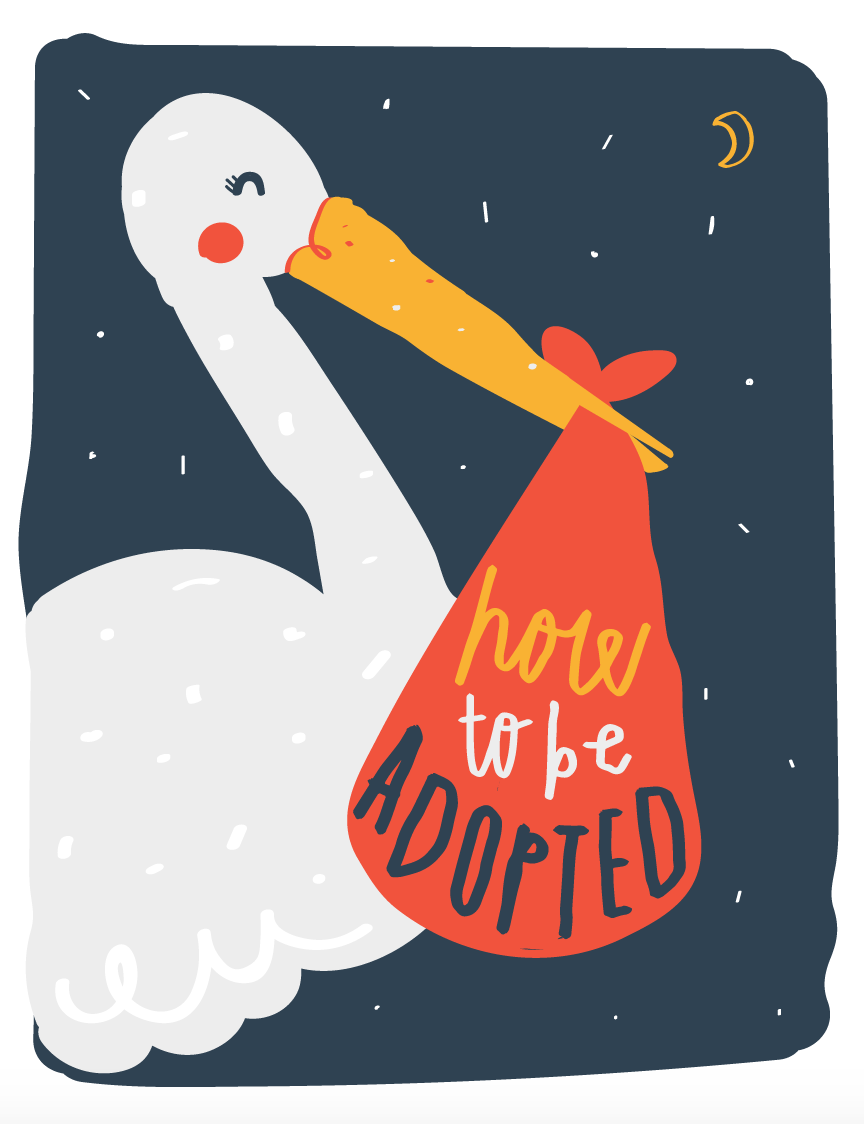
The Child Who Lost Their Mother Before They Had Language
Adoption, Misdiagnosis, and the Psychological Blind Spot Still Existing Within the NHS
By Freddie Louise Bicker. MBACP BSc (Hons)
I sometimes sit in therapy rooms and feel as though I am watching the same story unfold under different names.
One person arrives carrying an ADHD diagnosis but speaks in the language of chronic hyper vigilance and emotional survival.
Another presents through addiction, yet beneath the substance use is an unbearable fear of abandonment that predates memory itself.
Another describes lifelong shame, relational instability, dissociation, people pleasing, exhaustion from masking, and a persistent feeling of being psychologically “unreal.”
And again and again, I notice something profoundly unsettling.
The system often becomes intensely interested in the symptom — while remaining strangely uninterested in the rupture.
As both an adoptee and a therapist, I have become increasingly preoccupied by a question that I believe mental health services are still failing to confront deeply enough:
What happens to a human being when separation occurs before language, before cognition, before narrative — when the body experiences loss before the mind can make meaning of it?
And what happens when that rupture is never adequately integrated into the psychological formulations through which that person is later understood?
Because this is what I believe is happening to many adult adoptees within the NHS.
They are being assessed, categorised, medicated, stabilised, referred, diagnosed, risk-managed, and pathologised — often without the system ever fully understanding the developmental context from which their adaptations emerged.
Not because clinicians are malicious.
But because adoption itself still occupies an oddly minimised psychological position within mainstream mental health discourse.
The NHS Often Treats Adoption as Biography Rather Than Neurodevelopment
This, to me, is one of the most intellectually and clinically significant problems.
Within many assessments, adoption is recorded as historical information rather than understood as a potentially organising psychological experience.
A sentence appears in the background history:
“Adopted at six months.”
“Adopted from foster care.”
“No contact with biological family.”
And then the assessment moves on.
But contemporary attachment research, interpersonal neurobiology, developmental trauma theory, and affect regulation research increasingly suggest something far more complex:
The infant nervous system is not simply developing cognition. It is developing relational expectation.
The child is learning:
whether distress will be met,
whether regulation arrives,
whether proximity is safe,
whether emotional needs threaten connection,
whether the self is worthy of being kept alive psychologically inside another mind.
This is not sentimental language.
It is developmental science.
The right hemisphere of the brain, responsible for emotional regulation, relational processing, body-based affective states, and implicit memory, develops primarily through early attachment experiences. Long before autobiographical memory forms, the infant nervous system is already adapting to relational conditions.
This means that separation, inconsistency, neglect, fear, or emotional absence may become encoded somatically and relationally before they can ever become narratively remembered.
The body knows before the mind understands.
And yet adult adoptees frequently enter systems still dominated by symptom-based frameworks that privilege observable behaviours over developmental meaning.
The Misdiagnosis Question Is More Complicated — and More Ethically Serious — Than We Admit
I want to speak carefully here, because nuance matters enormously.
ADHD exists.
Neurodivergence exists.
Many adoptees are genuinely ADHD.
But I believe we are entering clinically dangerous territory if we fail to differentiate between:
neurodevelopmental difference,
developmental trauma adaptation,
attachment-based survival,
dissociation,
chronic hyperarousal,
and identity-based fragmentation.
Because phenomenologically, these experiences can overlap profoundly.
An adoptee who cannot concentrate may not simply be inattentive.
They may be scanning relational environments for threat.
An adoptee who appears emotionally impulsive may not simply lack executive functioning.
They may have developed within chronic nervous system dysregulation where affect was never safely co-regulated.
An adoptee who dissociates may appear distracted, disengaged, or cognitively disorganised — while actually moving into survival states shaped by preverbal overwhelm.
What concerns me is not diagnosis itself.
What concerns me is diagnostic reductionism.
The danger of collapsing profoundly complex developmental histories into symptom clusters without sufficiently exploring the relational architecture underneath them.
Because once a formulation becomes reductionistic, the person themselves often disappears.
Many Adoptees Become Masters of Adaptation While Remaining Strangers to Themselves
I think one of the least understood aspects of adoption is the sheer sophistication of adaptation.
Many adoptees become extraordinarily psychologically perceptive.
We learn:
how to read emotional atmospheres,
how to anticipate abandonment,
how to minimise our needs,
how to become acceptable,
how to perform competence,
how to caretake others,
how to hyper-achieve,
how to disappear emotionally while remaining externally functional.
From the outside, this can look like resilience.
But internally, it can involve profound fragmentation.
Donald Winnicott wrote about the “false self” as a relational adaptation developed when authentic emotional experience cannot safely emerge within the caregiving environment. I often wonder how many adoptees move through life carrying exquisitely sophisticated adaptive selves while remaining profoundly disconnected from their own embodied emotional reality.
Not because they are disordered.
But because adaptation became necessary long before authenticity felt safe.
And this is where I believe many systems still fail adoptees psychologically.
The system often asks:
“What symptoms are present?”
instead of:
“What adaptations became necessary for survival?”
Those are radically different clinical questions.
Adoption Is Still Psychologically Under-Theorised Within Mainstream Services
Despite growing conversations around trauma-informed care, adult adoptees remain remarkably absent from:
NHS formulation models,
neurodevelopmental training,
addiction services,
EDI frameworks,
and broader psychological discourse.
This absence is extraordinary when one considers how frequently adoptees appear across:
mental health services,
substance misuse systems,
attachment trauma presentations,
relational instability,
self-harm,
eating disorders,
and identity disturbance.
The adoptee experience often exists everywhere clinically — yet nowhere conceptually.
And I think part of the reason is this:
Adoption remains culturally defended.
Society struggles to hold two realities simultaneously:
that adoption can involve love, safety, and opportunity,
and that relinquishment may still constitute profound psychological rupture.
To acknowledge the second reality often evokes discomfort because it destabilises simplistic rescue narratives.
But mature psychological thinking requires complexity.
Love after loss does not erase loss.
Safety after rupture does not erase rupture.
And gratitude does not metabolise preverbal grief.
What Would Real Adoption-Informed Practice Look Like?
Real adoption-informed practice would not pathologiseadoptees.
Nor would it romanticise trauma.
Instead, it would introduce developmental depth into assessment and formulation.
It would train clinicians to think relationally, neurobiologically, and contextually.
It would ask:
What happened before language?
How did this nervous system learn regulation?
What attachment adaptations developed?
What survival strategies became organised into personality?
How might grief, identity rupture, and relinquishment still be living within this presentation?
It would move beyond diagnostic binaries and toward integrative formulation.
Because human beings are not categories.
They are developmental stories.
Why I Believe This Conversation Matters Now
I think many adoptees spend years carrying an invisible existential question:
“If my earliest experience involved separation, what does that say about my worth?”
Not always consciously.
Not always verbally.
But somatically. Relationally. Implicitly.
And unless clinicians are trained to think deeply about attachment, relinquishment, trauma, and adaptation, that question often remains untouched beneath layers of symptom management.
As an adoptee, I know how easy it is to become highly functional while remaining profoundly unheldpsychologically.
As a therapist, I now recognise how many adoptees are surviving inside systems that still do not fully know how to conceptualise them.
And perhaps this is the thought that stays with me most powerfully:
The child who lost connection before they had language may spend an entire lifetime trying to understand a pain that the world keeps explaining incompletely.
Until systems learn to see adoptees not simply as people with symptoms, but as people with developmental histories shaped by rupture, adaptation, grief, and survival, many will continue receiving treatment without ever feeling fully understood.
Not because they are resistant.
But because the formulation itself was never deep enough to hold them.
Written by Freddie Louise Bicker
© 2026 Freddie Louise Bicker. All rights reserved.