What I needed my white parents to know
By Michael Gaither | Beyond the Moment Adoption Studio
I was in third grade the first time I flipped a desk. It was done before I knew it was going to happen. One moment I was sitting there, the next moment the desk was on the floor and my glasses were across the room and I was saying things to the kids around me that had nothing to do with anything that had actually happened that day.
My grandmother had come to grandparents day. I had asked my mother not to send her. At that age I couldn't explain why, I just knew that being there would put me in the middle of the stares and questions I'd gotten tired of fielding, other kids working out how a white woman could be my grandmother. I'd already spent a lot of time being the one who had to explain things that nobody else in my class ever had to explain, and I was tired of it before I was even out of kindergarten.
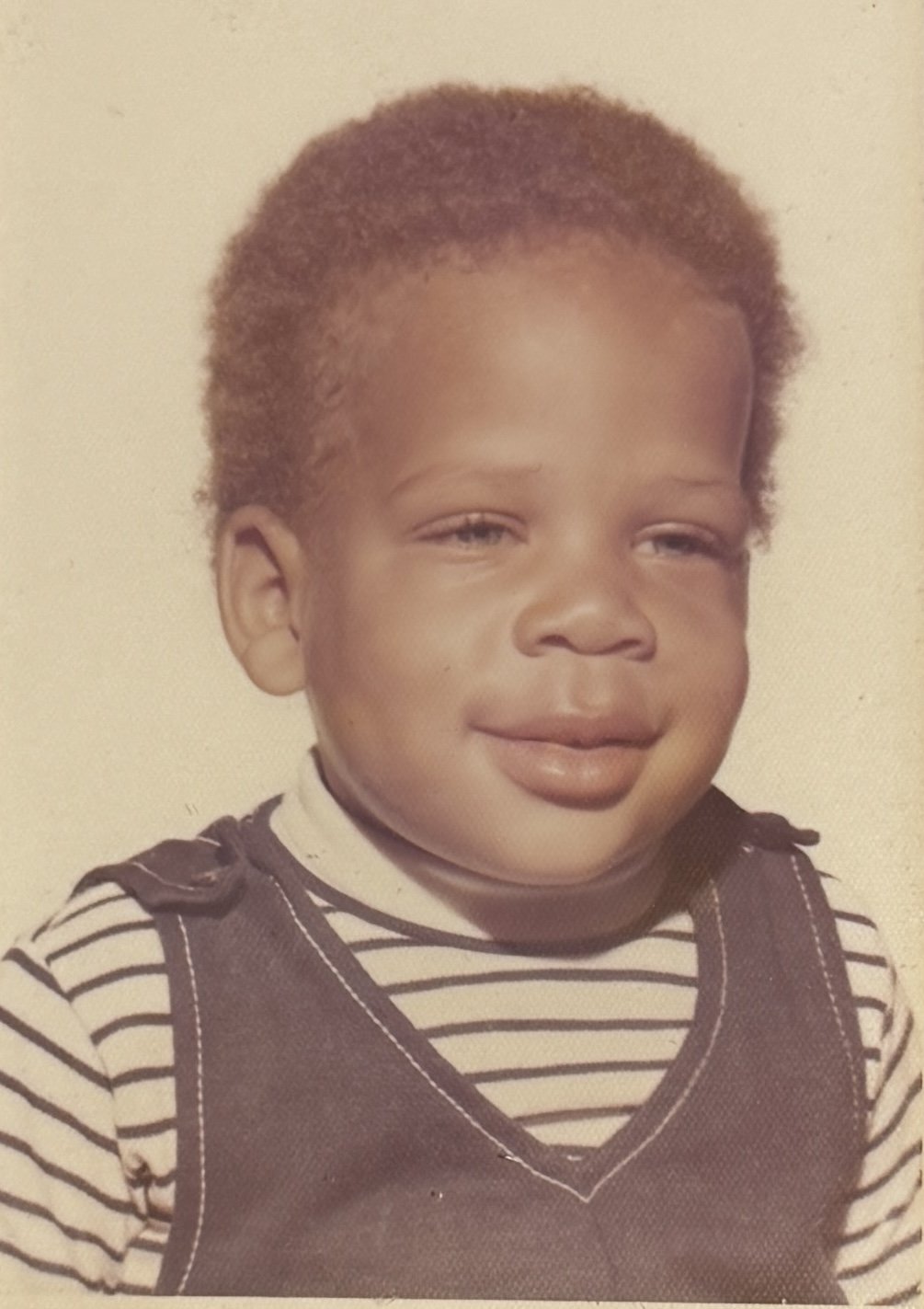
Michael as a child
My mother sent her anyway. She meant well, and I know that now. But what I knew then was that I had asked for something that mattered to me and it got overridden. When grandparents day was over and all of that tension had nowhere else to go, it came out the only way I knew how.
That moment tells you exactly who I was as a child. I was adopted at 18 months old from Syracuse, New York, and raised by a white family in Lincoln, Nebraska. If you know anything about Lincoln you already have a picture of what my world looked like. White neighborhoods, white classrooms, white everything. And me, the only one, trying to figure out how to live inside that without the language to tell anyone what it was costing me.
I spent 30 years in education after growing up that way. Teacher, principal, district administrator, executive leadership coach. Over those years I sat across from hundreds of kids who reminded me of myself. Kids who got labeled difficult, angry, checked out. I knew what was underneath it because I'd lived underneath it. The difference was that by the time I was sitting across from them, I finally had the language for it.
What I didn't have as a child was anyone asking me the right questions. At the dinner table the questions were always about what I learned at school, and I understand why. But school wasn't where my head was. Surviving was the actual work I was doing every day. Mapping which hallways to avoid, absorbing stares in the Sunday school room at Trinity United Methodist Church every week, eating as many cookies as I could hold just to have something to do with my hands. What I needed was someone asking me what was hard today, what I'd been carrying that I hadn't told anybody. Nobody asked me that, so I carried it alone until carrying it quietly stopped being something I could manage.
There's something else that took me a long time to name. I thought about my biological family constantly. Many nights I lay in bed wondering who they were, whether they thought about me, whether they'd recognize me if they ever saw me. Knowing this doesn't mean your child loves you less or is preparing to leave you. It means they're human. Your child is almost certainly doing the same thing, and the silence around that question isn't protecting them, it's just making them hold it in the dark.
I didn't find my way back to my biological family until I was 49 years old. My mother, my grandmother, my great-aunts and uncles, my cousins, my siblings. The family I was separated from when I was a year and a half old. I was 49 before I knew what it felt like to look at someone and see myself looking back. Forty-nine years is a long time to wait for that. The waiting costs things that don't fully come back.
My parents didn't need to be perfect. They needed to be curious enough about my experience to sit in the discomfort of what they didn't know. I needed them to stop assuming that because things looked fine from the outside, they were fine on the inside. The silence around race in our home wasn't neutral. It told me loud and clear that what I was carrying wasn't something we could talk about, and that made me carry it harder than I had to.
Your child is watching you right now to find out whether this is a family that can handle the real conversation or whether they need to keep managing it alone. The way you respond to the small moments, the stares in public, the questions from strangers, what comes home from school, those moments are telling your child something every single time. They're finding out whether you see what they're carrying, whether you're someone they can bring it to, and whether love in this family also makes room for honesty.
I was 49 years old before I knew what it felt like to look at someone and see myself. You have a chance to make sure your child doesn't have to wait that long to feel seen, and that's the whole reason I do this work. What you know matters, and so does what you're willing to look at. The time to look is now, while they're still in your house and still deciding whether you're someone they can trust with the hard stuff.
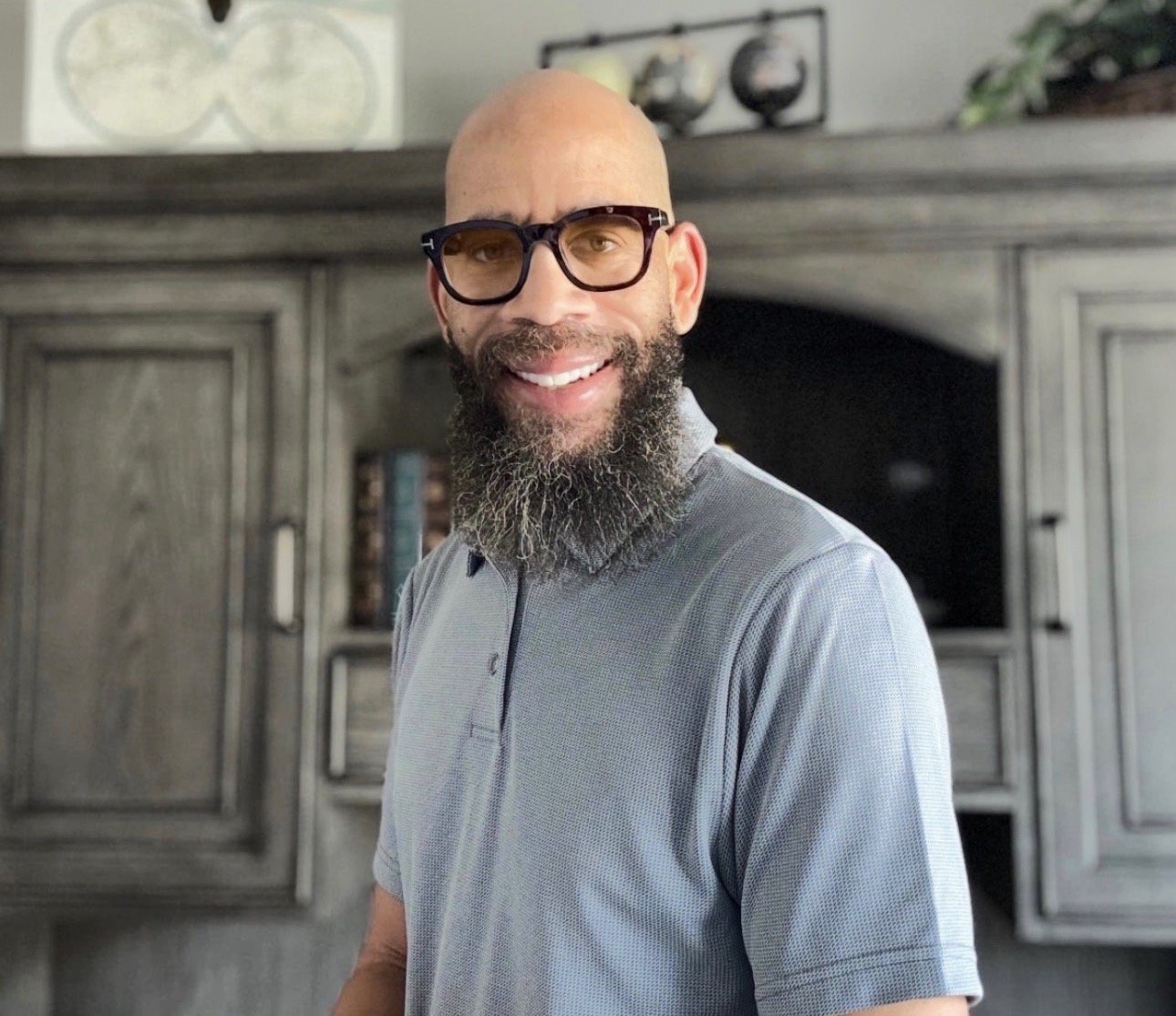
Michael today
Resources from this article:
Download the free guide "7 Conversations Every White Parent Must Have With Their Black Child" at beyondthemomentadoptionstudio.com/#community.
The Race Talk Toolkit ($37) gives parents a framework for staying in these conversations — available at payhip.com/b/qa4PZ.